Mental Wellness
How to boost mental wellness through exercise – Having good mental wellness is crucial for overall health and well-being. It involves managing emotions, coping with stress, and maintaining a positive outlook on life.
Exercise and Mental Well-Being
Regular exercise has been shown to have a positive impact on mental well-being in various ways:
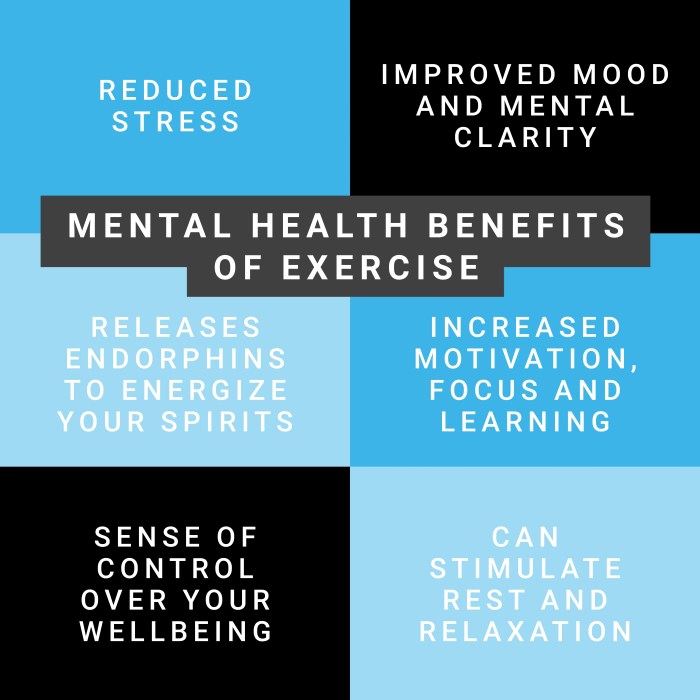
- Exercise releases endorphins, also known as “feel-good” hormones, which can help reduce feelings of anxiety and depression.
- Physical activity can improve sleep quality, which is essential for mental health and cognitive function.
- Engaging in exercise can boost self-esteem and confidence, leading to a more positive self-image.
- Regular workouts can serve as a healthy coping mechanism for stress and can help alleviate symptoms of conditions like PTSD.
Examples of Mental Health Benefits from Exercise
- Studies have shown that individuals who exercise regularly are less likely to experience symptoms of depression and anxiety.
- Physical activity has been linked to improved cognitive function and a reduced risk of cognitive decline in older adults.
- People who participate in team sports or group fitness classes often report a sense of community and social support, which can have a positive impact on mental wellness.
Physical Fitness
Regular exercise plays a crucial role in boosting mental wellness by improving physical fitness. When we engage in physical activities, our bodies release endorphins – also known as “feel-good” hormones – which help reduce stress, anxiety, and depression.
Examples of Exercises
- Cardiovascular exercises such as running, cycling, or swimming help improve heart health and overall endurance.
- Strength training exercises like weightlifting or bodyweight workouts help build muscle strength and improve metabolism.
- Flexibility exercises such as yoga or Pilates can enhance balance, mobility, and reduce the risk of injuries.
Role of Regular Exercise
Regular exercise not only helps maintain physical health but also contributes to mental well-being. It can improve sleep quality, boost self-esteem, and increase energy levels. By incorporating a variety of exercises into your routine and staying consistent, you can enhance your physical fitness and support your mental wellness in the long run.
Healthy Eating
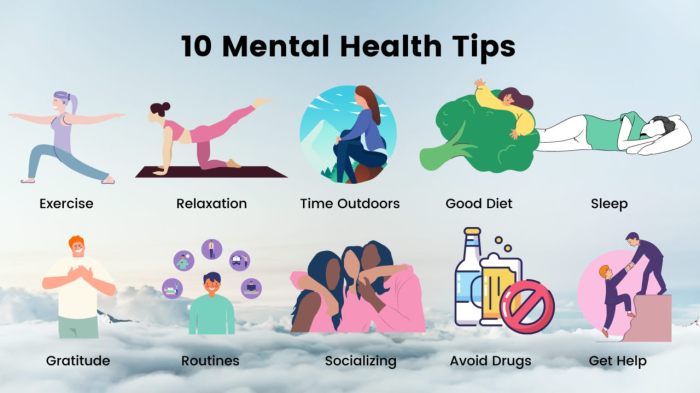
Eating a balanced diet plays a crucial role in promoting mental wellness. The food we consume directly impacts our brain function, mood, and overall mental health. By maintaining healthy eating habits, we can support our mental well-being and improve our quality of life.
Connection Between Diet and Mental Wellness
Nutrition has a significant impact on our mental health. Consuming nutrient-rich foods provides the necessary vitamins, minerals, and antioxidants that are essential for brain function. A diet high in processed foods, sugar, and unhealthy fats can lead to inflammation in the body, affecting brain health and contributing to mental health issues such as depression and anxiety.
- Include a variety of fruits and vegetables in your daily meals to ensure you are getting a wide range of nutrients that support brain health.
- Incorporate whole grains, lean proteins, and healthy fats like omega-3 fatty acids into your diet to provide a steady source of energy and support optimal brain function.
- Avoid excessive consumption of sugary beverages, processed foods, and foods high in saturated fats, as they can negatively impact mood and cognitive function.
- Stay hydrated by drinking plenty of water throughout the day, as dehydration can affect cognitive performance and mood.
- Consider consulting with a healthcare provider or nutritionist to create a personalized meal plan that supports your mental health goals.
Impact of Nutrition on Overall Well-Being
A well-balanced diet not only supports mental wellness but also contributes to overall well-being. Proper nutrition can help reduce the risk of chronic diseases, improve energy levels, and enhance sleep quality, all of which are essential for maintaining good mental health.
Remember, a healthy diet is not just about the foods you eat, but also about how those foods make you feel physically and mentally.
Preventive Care
Regular physical activity plays a crucial role in preventive care for mental health. By incorporating exercise into your routine, you can reduce the risk of developing various mental health conditions and promote overall well-being.
Benefits of Exercise for Preventive Care
- Exercise helps in reducing stress and anxiety levels, which are common risk factors for mental health disorders.
- Physical activity releases endorphins, also known as the “feel-good” hormones, which can improve mood and mental clarity.
- Regular exercise can enhance sleep quality, which is vital for mental wellness and cognitive function.
Examples of Preventive Measures through Exercise
- Engaging in aerobic exercises like running, swimming, or cycling can boost cardiovascular health and overall mental well-being.
- Practicing mindfulness activities such as yoga or tai chi can help reduce stress and improve emotional resilience.
- Strength training exercises not only improve physical strength but also promote self-confidence and a positive body image.
Balanced Diet: How To Boost Mental Wellness Through Exercise
A balanced diet plays a crucial role in boosting mental wellness by providing essential nutrients that support brain function and overall well-being.
Components of a Balanced Diet
A balanced diet consists of a variety of foods from different food groups to ensure adequate intake of essential nutrients:
- Vegetables and fruits: Rich in vitamins, minerals, and antioxidants that support brain health.
- Whole grains: Provide sustained energy and support cognitive function.
- Lean proteins: Essential for neurotransmitter function and mood regulation.
- Healthy fats: Omega-3 fatty acids found in fish and nuts are beneficial for brain health.
- Hydration: Drinking enough water is crucial for optimal brain function and overall health.
Importance of Maintaining a Balanced Diet
Maintaining a balanced diet is essential for overall health as it:
- Supports brain function and cognitive performance.
- Boosts mood and mental well-being.
- Reduces the risk of chronic diseases like heart disease, diabetes, and obesity.
- Improves energy levels and overall vitality.
Tips for Creating a Diet Plan that Supports Mental Well-being
Creating a diet plan that supports mental well-being involves:
- Include a variety of colorful fruits and vegetables in your meals for a range of nutrients.
- Choose whole grains over refined grains for sustained energy levels.
- Incorporate lean proteins like poultry, fish, beans, and nuts into your diet.
- Limit processed foods high in sugar, salt, and unhealthy fats.
- Stay hydrated by drinking plenty of water throughout the day.
- Listento your body’s hunger and fullness cues to maintain a healthy relationship with food.
Regular Exercise
Regular exercise is essential for maintaining both physical fitness and mental wellness. Incorporating exercise into our daily routines can have numerous benefits for our overall well-being. In particular, regular exercise is known to improve mood, reduce stress, boost self-esteem, and enhance cognitive function.
Types of Exercises for Mental Wellness
- Aerobic Exercise: Activities like running, cycling, or dancing can help increase oxygen flow to the brain, improving mood and reducing anxiety.
- Strength Training: Building muscle strength can have a positive impact on self-confidence and can help alleviate symptoms of depression.
- Yoga and Pilates: These mind-body exercises focus on mindfulness, relaxation, and stress reduction, promoting mental clarity and emotional balance.
Examples of Workout Routines
It’s important to find a routine that works best for you and your mental health needs.
- Morning Walks: Starting the day with a brisk walk can boost energy levels and set a positive tone for the day ahead.
- High-Intensity Interval Training (HIIT): Short bursts of intense exercise followed by brief rest periods can improve mood and increase endorphin levels.
- Mindful Stretching: Taking time to stretch and focus on breathing can help reduce stress and promote relaxation.
Holistic Wellness
Holistic wellness is a concept that focuses on the overall well-being of an individual, considering the interconnectedness of the mind, body, and spirit. It emphasizes the importance of addressing all aspects of health to achieve a state of balance and harmony. When it comes to mental health, a holistic approach takes into account not just the symptoms of mental illness, but also the underlying causes and contributing factors.
Enhancing Overall Well-being
A holistic approach to wellness can enhance overall well-being by promoting a sense of wholeness and integration within oneself. By addressing physical, mental, emotional, and spiritual needs, individuals can experience greater levels of happiness, fulfilment, and inner peace.
Strategies for Achieving Holistic Wellness
One way to achieve holistic wellness is through regular exercise, which has numerous benefits for the mind, body, and spirit. Exercise can help reduce stress, improve mood, boost self-esteem, and enhance cognitive function. In addition to exercise, incorporating other lifestyle factors such as healthy eating, mindfulness practices, adequate sleep, and social connections can further support holistic well-being.
Chronic Diseases
Regular physical activity plays a crucial role in reducing the risk of chronic diseases related to mental health. Exercise has been shown to have a positive impact on managing chronic conditions, leading to better mental wellness overall. By incorporating physical activity into your routine, you can significantly improve your mental health and reduce the risk of developing chronic diseases.
Impact of Exercise on Chronic Diseases
- Regular exercise can help lower the risk of developing conditions such as heart disease, diabetes, and obesity, all of which have a significant impact on mental health.
- Physical activity has been linked to improved cognitive function and reduced symptoms of depression and anxiety, which are often associated with chronic diseases.
- Exercise can also help regulate blood pressure, cholesterol levels, and blood sugar levels, reducing the risk of complications from chronic conditions.
Examples of Chronic Diseases Influenced by Exercise
- Heart Disease: Regular exercise can strengthen the heart muscle, improve circulation, and lower blood pressure, reducing the risk of heart disease.
- Diabetes: Physical activity helps the body use insulin more effectively, leading to better blood sugar control and reducing the risk of diabetes complications.
- Obesity: Exercise plays a key role in weight management, helping to prevent obesity and its associated mental health challenges.
Immunity Boosters
Regular exercise plays a crucial role in boosting immunity and supporting mental wellness. When you engage in physical activity, your body releases endorphins that help reduce stress and anxiety, leading to overall improved mental health. Additionally, exercise helps in improving circulation, which allows immune cells to move through the body more efficiently, thus enhancing the immune system.
Relationship between Strong Immune System and Mental Health, How to boost mental wellness through exercise
Regular exercise not only boosts immunity but also strengthens the connection between a strong immune system and mental health. A healthy immune system can help protect against infections and diseases, reducing the risk of illnesses that can impact mental well-being. By incorporating exercise into your routine, you can support both your immune system and mental health simultaneously.
Examples of Immunity-Boosting Exercises
- Cardiovascular exercises such as running, cycling, or swimming help increase circulation and improve immune function.
- Strength training exercises like weightlifting or bodyweight exercises can enhance overall strength and immunity.
- Yoga and meditation promote relaxation and reduce stress, which can have a positive impact on both immunity and mental wellness.
FAQs
How often should I exercise to improve my mental wellness?
It’s recommended to engage in at least 150 minutes of moderate-intensity exercise per week to see mental health benefits.
Can specific types of exercise be more beneficial for mental wellness than others?
Activities like yoga, running, and swimming are known to be particularly effective in improving mental well-being.
Is there a connection between mental wellness and the duration of exercise sessions?
While any exercise is beneficial, longer sessions of physical activity have been linked to greater improvements in mental health.