Introduction to Balanced Diet on a Budget
How to achieve a balanced diet on a budget – A balanced diet is a meal plan that includes a variety of foods in appropriate portions to provide the necessary nutrients for overall health and well-being. It consists of a mix of carbohydrates, proteins, fats, vitamins, and minerals essential for the body to function optimally.
While maintaining a balanced diet is crucial for good health, the challenge arises when trying to achieve this on a limited budget. Many individuals and families struggle to afford nutritious foods due to financial constraints, leading to a higher consumption of processed and unhealthy options.
Benefits of Achieving a Balanced Diet on a Budget
Despite financial limitations, there are numerous benefits to prioritizing a balanced diet:
- Improved overall health and well-being
- Reduced risk of chronic diseases such as obesity, diabetes, and heart conditions
- Enhanced energy levels and better mood
- Supports proper growth and development, especially in children
- Boosts immune function and aids in maintaining a healthy weight
Planning and Budgeting for a Balanced Diet
When it comes to maintaining a balanced diet on a budget, strategic planning and smart budgeting are key factors to consider. By carefully organizing your meals, setting a grocery budget, and utilizing meal prep techniques, you can ensure that you are eating nutritiously without breaking the bank.
Tips for Planning Nutritious and Affordable Meals
- Start by creating a weekly meal plan that includes a variety of fruits, vegetables, whole grains, and lean proteins.
- Look for budget-friendly recipes online or in cookbooks that focus on using affordable ingredients.
- Buy in-season produce and consider purchasing frozen fruits and vegetables to save money without compromising on nutrition.
- Opt for plant-based protein sources like beans, lentils, and tofu, which tend to be more cost-effective than meat.
Strategies for Creating a Grocery Budget
- Set a realistic budget for groceries based on your income and expenses, allocating a certain amount for fresh produce, proteins, and pantry staples.
- Make a shopping list before heading to the store and stick to it to avoid impulse purchases.
- Compare prices at different stores and consider buying generic brands or items on sale to save money.
- Take advantage of loyalty programs, coupons, and cashback offers to further reduce your grocery costs.
Importance of Meal Prepping and Batch Cooking, How to achieve a balanced diet on a budget
- Allocate time each week to meal prep by chopping vegetables, marinating proteins, and cooking grains in advance to streamline the cooking process.
- Prepare meals in large batches and portion them out for the week to save time and prevent the temptation of ordering takeout.
- Invest in reusable containers to store prepped ingredients and cooked meals, making it easy to grab a healthy option when you’re short on time.
- Batch cooking allows you to take advantage of buying ingredients in bulk, which is often more cost-effective than purchasing smaller quantities.
Smart Shopping for Nutritious Foods: How To Achieve A Balanced Diet On A Budget
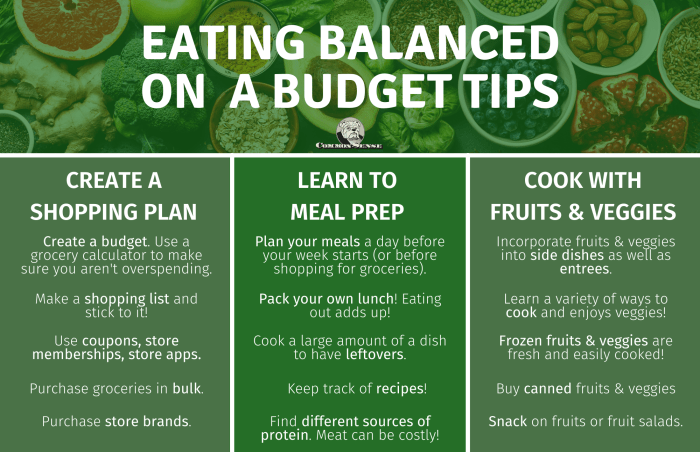
When it comes to maintaining a balanced diet on a budget, smart shopping for nutritious foods plays a crucial role. By identifying budget-friendly yet nutritious options and utilizing smart strategies at the grocery store, you can make healthy choices without breaking the bank.
Identifying Budget-Friendly Yet Nutritious Foods
It’s important to prioritize nutrient-dense foods that offer a high nutritional value for their cost. Consider including the following budget-friendly yet nutritious options in your shopping list:
- Beans and legumes: Packed with protein, fiber, and essential vitamins.
- Oats: A versatile whole grain that is budget-friendly and nutritious.
- Frozen fruits and vegetables: Offer convenience, longer shelf life, and comparable nutritional value to fresh produce.
- Canned fish: Rich in omega-3 fatty acids and a cost-effective source of protein.
Tips for Navigating the Grocery Store
When shopping for affordable, healthy options, keep these tips in mind to make the most of your budget:
- Plan your meals and create a shopping list to avoid impulse purchases.
- Look for sales, discounts, and coupons to maximize savings on nutritious foods.
- Compare prices per unit to determine the best value for your money.
- Opt for store brands or generic versions of products to save on cost without compromising quality.
Benefits of Buying in Bulk or Using Frozen Fruits and Vegetables
Buying in bulk or opting for frozen fruits and vegetables can offer several benefits for your budget and nutritional intake:
- Cost savings: Purchasing in bulk or choosing frozen options often results in lower prices per serving.
- Reduced food waste: Frozen produce has a longer shelf life, reducing the risk of spoilage and waste.
- Convenience: Having frozen fruits and vegetables on hand makes meal preparation easier and faster.
Cooking and Meal Preparation Techniques
When it comes to achieving a balanced diet on a budget, cooking and meal preparation play a crucial role. By utilizing simple, cost-effective recipes and cooking techniques, you can ensure that you are getting the nutrients you need without breaking the bank.
Batch Cooking for Savings
One effective way to save money and time is by cooking in batches. By preparing larger quantities of food at once, you can take advantage of bulk discounts, reduce waste, and have ready-to-eat meals throughout the week.
- Plan your meals for the week ahead of time to avoid last-minute decisions that may lead to unhealthy choices.
- Cook large batches of staple foods like rice, beans, or grilled chicken that can be used in various dishes.
- Divide the cooked food into individual portions and store them in the fridge or freezer for quick and easy meals.
Nutrient-Rich Cooking Techniques
It’s important to retain the nutrients in your food during the cooking process. Here are some cost-effective cooking techniques that can help preserve the nutritional value of your meals:
- Steaming: Steaming vegetables helps retain their vitamins and minerals without the need for added fats or oils.
- Grilling or Roasting: Cooking meats and vegetables on the grill or in the oven can enhance their flavors without the need for excessive seasoning.
- Stir-Frying: Quick stir-frying vegetables and lean proteins in a small amount of oil can help maintain their nutrients while adding flavor.
Incorporating Variety and Whole Foods
When aiming for a balanced diet, it is crucial to incorporate a wide variety of foods to ensure you are getting all the essential nutrients your body needs. Including whole foods like grains, fruits, vegetables, and proteins is key to achieving this balance.
Tips for Including Whole Foods
- Choose whole grains such as quinoa, brown rice, and oats over refined grains like white bread or pasta. Whole grains are rich in fiber and nutrients.
- Include a colorful array of fruits and vegetables in your meals to benefit from various vitamins, minerals, and antioxidants.
- Opt for lean protein sources like poultry, fish, beans, and tofu to support muscle growth and repair.
- Incorporate nuts, seeds, and legumes into your diet for healthy fats, protein, and fiber.
Benefits of Seasonal Eating
Eating seasonally not only enhances the flavor of your meals but also offers several health and budget advantages. Seasonal fruits and vegetables are often fresher, more nutritious, and more affordable due to their abundance during specific times of the year.
Eating Out and Snacking Mindfully
When dining out on a budget or looking for snack options, it’s essential to make healthy choices that align with your balanced diet goals. Mindful snacking and portion control play significant roles in maintaining a nutritious lifestyle without breaking the bank.
Making Healthy Choices When Eating Out
When eating out on a budget, consider the following strategies to make healthier choices:
- Avoid fried or deep-fried dishes and opt for grilled, baked, or steamed options.
- Choose dishes with plenty of vegetables and lean protein sources like fish or chicken.
- Opt for soups or salads as starters to help control portion sizes and increase nutrient intake.
- Avoid sugary drinks and opt for water, unsweetened tea, or sparkling water instead.
Mindful Snacking and Portion Control
When it comes to snacking, mindful choices and portion control are key to maintaining a balanced diet:
- Keep nutritious snacks like fruits, vegetables, nuts, or yogurt easily accessible to avoid reaching for unhealthy options.
- Avoid mindless snacking in front of the TV or computer to prevent overeating.
- Use smaller plates or bowls to control portion sizes and prevent consuming excess calories.
- Practice mindful eating by savoring each bite, chewing slowly, and paying attention to hunger cues to prevent overindulging.
Staying Active and Fit on a Budget
Regular exercise is essential for maintaining overall health and well-being, but it doesn’t have to break the bank. By incorporating affordable ways to stay active, you can achieve your fitness goals without spending a fortune. Here are some tips to help you stay fit on a budget:
Incorporating Regular Exercise into Daily Routines
- Take advantage of free workout resources online, such as workout videos on YouTube or fitness apps that offer guided workouts.
- Walk or bike to nearby destinations instead of driving to incorporate more physical activity into your daily routine.
- Utilize public parks and outdoor spaces for activities like jogging, cycling, or bodyweight exercises.
Benefits of Physical Fitness for Overall Health
- Regular exercise can help improve cardiovascular health, strengthen muscles, and boost mood and mental well-being.
- Physical fitness can reduce the risk of chronic diseases like heart disease, diabetes, and obesity.
- Engaging in regular physical activity can improve sleep quality and overall energy levels.
Creating a Home Workout Routine without Costly Equipment
- Use everyday household items like water bottles or chairs for resistance training exercises.
- Try bodyweight exercises like squats, lunges, push-ups, and planks that require no equipment.
- Explore free workout apps or online resources that offer home workout routines tailored to your fitness level.
Mental Wellness and Holistic Health Practices
Maintaining mental wellness is crucial for overall health, as it is closely linked to physical well-being. Stress, anxiety, and other mental health issues can have a direct impact on our bodies, leading to various health problems. Therefore, it is essential to incorporate holistic health practices that promote both mental and physical well-being, even on a budget.
Practices for Holistic Health
Practicing mindfulness and meditation can help reduce stress levels and improve mental clarity. These practices don’t require any expensive equipment and can easily be done at home.
- Engaging in regular physical activity, such as yoga or walking, not only benefits your physical health but also boosts your mood and reduces anxiety.
- Connecting with nature by spending time outdoors or bringing plants into your living space can have a positive impact on mental well-being.
- Building a support system of friends and family members can provide emotional support during challenging times, promoting a sense of belonging and reducing feelings of isolation.
Importance of Self-Care and Stress Management
Self-care practices are essential for maintaining a balanced lifestyle and promoting mental wellness. Taking time for yourself, practicing relaxation techniques, and setting boundaries can help prevent burnout and improve overall well-being.
Remember, self-care is not selfish; it is necessary for your mental and physical health.
- Engaging in hobbies or activities that bring you joy and relaxation can help reduce stress levels and improve your mood.
- Setting realistic goals and priorities can help you manage stress and avoid feeling overwhelmed by daily tasks.
- Seeking professional help or therapy when needed is a sign of strength and can provide valuable support in times of distress.
Preventive Care and Chronic Disease Management
Preventive care plays a crucial role in managing chronic diseases and promoting overall health and well-being. By adopting budget-friendly preventive measures and accessing affordable healthcare services, individuals can take proactive steps towards preventing and managing chronic conditions effectively.
Preventive Care Measures and Budget-Friendly Tips
Preventive care measures are essential for maintaining good health and reducing the risk of developing chronic diseases. Here are some budget-friendly tips to incorporate preventive care into your lifestyle:
- Stay up to date with routine screenings and check-ups to detect any health issues early on.
- Focus on a healthy diet rich in fruits, vegetables, whole grains, and lean proteins to support your immune system and overall health.
- Engage in regular physical activity to maintain a healthy weight and reduce the risk of chronic diseases like heart disease and diabetes.
- Avoid smoking and limit alcohol consumption to protect your overall health and well-being.
- Practice stress management techniques such as meditation, yoga, or deep breathing exercises to reduce the impact of stress on your health.
Role of Preventive Care in Managing Chronic Diseases
Preventive care plays a crucial role in managing chronic diseases by focusing on early detection, lifestyle modifications, and disease prevention. By incorporating preventive care measures into your daily routine, you can effectively manage chronic conditions and improve your quality of life.
Accessing Affordable Healthcare Services for Preventive Screenings
Accessing affordable healthcare services for preventive screenings and check-ups is essential for maintaining good health. Here are some tips to help you access affordable preventive care services:
- Look for community health clinics or local health departments that offer free or low-cost preventive screenings and check-ups.
- Check with your insurance provider to see if preventive care services are covered under your plan to reduce out-of-pocket expenses.
- Utilize telehealth services for virtual consultations and preventive screenings to save time and money on in-person visits.
- Take advantage of workplace wellness programs or employer-sponsored health initiatives that may offer discounted or free preventive care services.
Boosting Immunity Naturally
Maintaining a strong immune system is crucial for overall health and well-being. By incorporating cost-effective and easily accessible immunity boosters into your diet and lifestyle, you can support your body’s natural defenses and stay healthy. Here are some tips on how to strengthen your immune system naturally.
Identifying Immunity Boosters
- Include foods rich in Vitamin C, such as citrus fruits, bell peppers, and strawberries, to help boost immunity.
- Garlic, ginger, and turmeric have antimicrobial properties that can support immune function.
- Probiotic-rich foods like yogurt and kefir can help maintain a healthy gut microbiome, which is essential for immune health.
Strengthening Immune System through Diet and Lifestyle
- Stay hydrated by drinking plenty of water throughout the day to support immune function.
- Get regular exercise to boost circulation and promote a healthy immune response.
- Ensure adequate sleep to allow your body to repair and regenerate, enhancing immune function.
Importance of Balanced Diet for Optimal Immune Function
A balanced diet rich in fruits, vegetables, whole grains, lean proteins, and healthy fats provides essential nutrients that support immune function. By incorporating a variety of nutrient-dense foods into your meals, you can help your body maintain a strong immune system and protect against illnesses.
FAQ Explained
How can I plan nutritious meals on a tight budget?
Start by creating a meal plan based on affordable yet nutrient-dense ingredients like beans, lentils, and seasonal produce.
Is it possible to eat healthy on a limited budget?
Absolutely! With strategic planning and smart shopping, you can prioritize nutritious foods without overspending.
What are some cost-effective ways to boost immunity through diet?
You can enhance your immune system by incorporating foods rich in vitamin C, zinc, and antioxidants like citrus fruits, nuts, and leafy greens.
How can I stay active without spending much money?
Engage in activities like walking, jogging, or bodyweight exercises at home to maintain physical fitness without costly gym memberships.