Mental Wellness
Regular exercise plays a crucial role in promoting mental wellness. Physical activity has been shown to have a positive impact on mood, reducing symptoms of anxiety and depression.
Role of Endorphins
Endorphins, often referred to as the “feel-good” hormones, are released during exercise. These neurotransmitters act as natural painkillers and are responsible for the feelings of euphoria and well-being that many people experience after a workout.
- Endorphins help to alleviate stress and anxiety by reducing the perception of pain and triggering a positive feeling in the body.
- Regular exercise can lead to an increase in endorphin levels, which can contribute to a more positive outlook on life and improved mental health.
- Individuals who engage in physical activity regularly often report lower levels of depression and a greater sense of overall well-being.
Physical Fitness
Regular exercise plays a crucial role in improving overall physical fitness, which is essential for maintaining a healthy body and reducing the risk of various health conditions.
Cardiovascular Health
Regular aerobic exercises such as running, swimming, or cycling are excellent for improving cardiovascular health. These activities help strengthen the heart and lungs, leading to better circulation and increased endurance.
Muscle Strength
Incorporating strength training exercises, such as weightlifting or bodyweight exercises, can help improve muscle strength and tone. This type of exercise is essential for maintaining a healthy metabolism, posture, and overall physical strength.
Variety in Exercises
It is crucial to include a variety of exercises in your fitness routine to target different muscle groups and prevent overuse injuries. Mixing cardio, strength training, flexibility, and balance exercises ensures a well-rounded approach to physical fitness.
Healthy Eating
Regular exercise and healthy eating habits go hand in hand when it comes to promoting mental wellness. A balanced diet not only complements the benefits of physical activity but also plays a crucial role in maintaining overall mental health.
Nutrient-Rich Foods for Mental Wellness, Benefits of regular exercise for mental health
Eating nutrient-rich foods can enhance the effects of exercise on mental health. Here are some examples of foods that can support your mental well-being:
- Fatty Fish: Rich in omega-3 fatty acids, fatty fish like salmon, trout, and sardines can help reduce symptoms of anxiety and depression.
- Leafy Greens: Vegetables like spinach, kale, and broccoli are packed with vitamins, minerals, and antioxidants that can improve mood and cognitive function.
- Berries: Blueberries, strawberries, and other berries are high in antioxidants, which can protect the brain from oxidative stress and reduce inflammation.
- Nuts and Seeds: Almonds, walnuts, flaxseeds, and chia seeds are excellent sources of nutrients like magnesium, zinc, and omega-3 fatty acids, which are beneficial for mental health.
- Whole Grains: Foods like quinoa, brown rice, and oats provide a steady supply of energy to the brain and help regulate mood and stress levels.
Preventive Care
Regular exercise is not only beneficial for mental health but also plays a crucial role in preventive healthcare. Physical activity has a significant impact on reducing the risk of chronic diseases and contributes to overall well-being and longevity.
Reduced Risk of Chronic Diseases
Regular exercise, such as cardiovascular activities like running or swimming, can help lower the risk of developing chronic conditions such as heart disease, diabetes, and obesity. Physical activity helps improve cardiovascular health, regulate blood sugar levels, and maintain a healthy weight, all of which are key factors in preventing these diseases.
Overall Well-being and Longevity
Engaging in regular exercise not only improves physical health but also enhances mental well-being, reducing stress and anxiety levels. Additionally, exercise promotes better sleep quality, boosts mood, and enhances cognitive function, all of which contribute to a higher quality of life and increased longevity.
Balanced Diet
Regular exercise is undoubtedly beneficial for mental health, but the importance of a balanced diet should not be overlooked. Nutrition plays a crucial role in supporting the mental health benefits gained from physical activity. When combined with regular exercise, a balanced diet can enhance overall well-being and cognitive function.
Nutrient-Rich Foods for Mental Health
Eating a variety of nutrient-rich foods can help support mental health alongside regular exercise. Foods rich in omega-3 fatty acids, such as salmon, walnuts, and flaxseeds, have been linked to improved mood and cognitive function. Incorporating plenty of fruits and vegetables into your diet can provide essential vitamins, minerals, and antioxidants that support brain health.
Meal Plan for an Active Lifestyle
To maximize the benefits of regular exercise on mental health, it is essential to fuel your body with the right nutrients. Consider the following meal plan for an active lifestyle:
- Breakfast: Start your day with a balanced meal that includes whole grains, protein, and healthy fats. For example, oatmeal topped with nuts and berries.
- Lunch: Opt for a well-rounded meal with lean protein, vegetables, and whole grains. A grilled chicken salad with quinoa and mixed greens is a nutritious choice.
- Snack: Fuel your body with a healthy snack between meals, such as Greek yogurt with honey and almonds.
- Dinner: Finish your day with a balanced dinner that includes protein, vegetables, and complex carbohydrates. Try baked salmon with roasted sweet potatoes and steamed broccoli.
By following a balanced meal plan that aligns with an active lifestyle, you can nourish your body and mind to support optimal mental health benefits from regular exercise.
Regular Exercise
Regular exercise refers to physical activity that is performed consistently on a weekly basis. It is recommended that adults engage in at least 150 minutes of moderate-intensity exercise per week, or 75 minutes of vigorous-intensity exercise, along with muscle-strengthening activities on two or more days a week.
Benefits of Regular Exercise for Mental Health
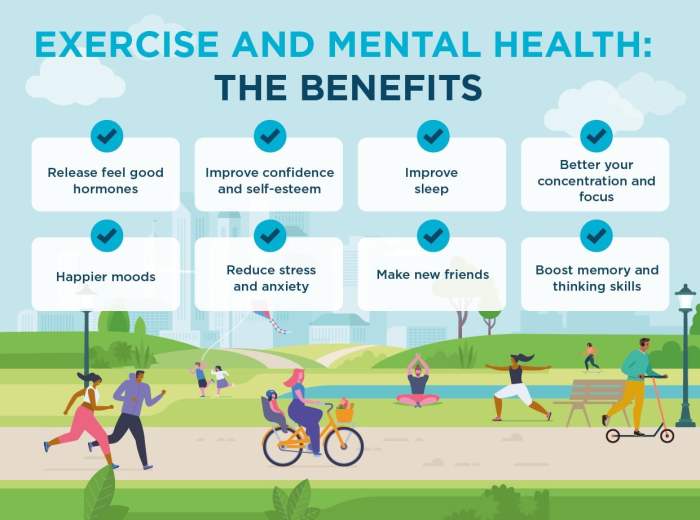
Regular exercise has numerous benefits for mental health. It can help reduce symptoms of anxiety, depression, and stress by releasing endorphins, which are chemicals in the brain that act as natural painkillers and mood elevators. Exercise also promotes better sleep, boosts self-esteem, and improves overall cognitive function.
- Improves Mood: Regular exercise can help enhance mood and reduce feelings of anxiety and depression. It promotes the release of neurotransmitters like serotonin and dopamine, which are known to improve mood and overall well-being.
- Stress Relief: Engaging in physical activity can help reduce stress levels by lowering the body’s stress hormones, such as cortisol. It provides a healthy outlet to release pent-up tension and frustration.
- Boosts Confidence: Achieving fitness goals through regular exercise can boost self-esteem and confidence. It gives individuals a sense of accomplishment and empowerment.
Tips for Staying Motivated to Exercise Regularly
Staying motivated to maintain a regular exercise regimen can be challenging, but it is essential for reaping the mental health benefits. Here are some tips to help you stay on track:
- Set Realistic Goals: Establish achievable fitness goals to track your progress and stay motivated. Start with small milestones and gradually increase the intensity and duration of your workouts.
- Find Activities You Enjoy: Choose exercises that you find enjoyable and engaging. Whether it’s dancing, hiking, or playing a sport, finding activities that you love can make it easier to stick to a routine.
- Create a Routine: Incorporate exercise into your daily schedule by setting aside specific times for physical activity. Treat it as a priority, just like any other important task.
Mental Health: Benefits Of Regular Exercise For Mental Health
Regular exercise not only benefits physical health but also plays a crucial role in improving mental well-being. The impact of exercise on mental health conditions is significant, offering a range of positive effects that can enhance overall emotional wellness and cognitive function.
Impact of Exercise on Specific Mental Health Conditions
Regular physical activity has been shown to have a positive impact on specific mental health conditions such as depression, anxiety, and stress. Exercise can help alleviate symptoms of depression by increasing the production of endorphins, which are known as the “feel-good” hormones. Similarly, engaging in physical activity can reduce feelings of anxiety and stress by promoting relaxation and improving sleep quality. Individuals who incorporate regular exercise into their routine often experience a boost in mood and a reduction in symptoms associated with various mental health disorders.
Exercise as a Coping Mechanism for Stress and Emotional Well-being
Exercise serves as a powerful coping mechanism for managing stress and enhancing emotional well-being. Physical activity helps to release pent-up tension and reduce levels of cortisol, the stress hormone. Engaging in exercise can also provide a sense of accomplishment and empowerment, boosting self-esteem and confidence. By focusing on the present moment during physical activity, individuals can practice mindfulness and improve their ability to cope with challenging emotions effectively.
Holistic Approach of Combining Exercise with Other Mental Health Treatments
Incorporating exercise into a comprehensive mental health treatment plan can enhance the effectiveness of other therapeutic interventions. Combining exercise with psychotherapy, medication, and other forms of treatment can create a holistic approach that addresses both the physical and psychological aspects of mental health. Regular physical activity can complement traditional treatments by improving overall well-being, reducing symptoms, and promoting long-term mental health resilience.
Holistic Wellness
Regular exercise plays a crucial role in contributing to holistic wellness by addressing the interconnectedness of physical, mental, and emotional health. When individuals engage in consistent physical activity, they experience benefits that extend beyond just physical fitness.
Examples of Holistic Wellness Practices
- Yoga: Combining physical postures, breathing exercises, and meditation, yoga promotes flexibility, strength, and mindfulness, contributing to overall well-being.
- Dance Therapy: Utilizing movement and creative expression, dance therapy helps individuals connect with their emotions, reduce stress, and improve mental health.
- Hiking: Immersing oneself in nature while hiking not only provides cardiovascular benefits but also enhances mental clarity, reduces anxiety, and fosters a sense of connection to the environment.
- Mindful Walking: Practicing mindfulness during walks allows individuals to focus on the present moment, increase self-awareness, and reduce negative thought patterns, promoting holistic wellness.
Chronic Diseases
Regular exercise plays a crucial role in preventing and managing chronic diseases. Physical activity has been shown to have numerous benefits for individuals with chronic conditions, improving their overall quality of life.
Cardiovascular Diseases
Regular exercise can help prevent cardiovascular diseases such as heart disease, stroke, and high blood pressure. Physical activity strengthens the heart, improves circulation, and helps maintain healthy blood pressure levels.
Diabetes
Physical activity is essential for individuals with diabetes as it helps control blood sugar levels and improve insulin sensitivity. Regular exercise can also reduce the risk of complications associated with diabetes.
Obesity
Exercise is a key component in managing and preventing obesity. Physical activity helps burn calories, build muscle mass, and boost metabolism, all of which are essential for weight management.
Arthritis
Regular exercise can help individuals with arthritis by reducing joint pain, stiffness, and inflammation. Physical activity also helps improve joint flexibility and range of motion, enhancing overall mobility.
Cancer
Physical activity has been linked to a reduced risk of certain types of cancer, including breast, colon, and lung cancer. Regular exercise can also improve cancer outcomes and quality of life for cancer survivors.
Immunity Boosters
Regular exercise plays a crucial role in boosting the immune system and enhancing overall well-being. By engaging in physical activity, individuals can strengthen their body’s ability to fight off infections and illnesses.
Benefits of Regular Exercise for Immune System Health
Regular exercise can improve the immune system function by promoting good circulation, which allows immune cells to move freely throughout the body and detect potential threats more effectively. Additionally, physical activity helps reduce inflammation, which is linked to various chronic diseases and weakened immune response.
- Cardiovascular Exercises: Activities like running, swimming, or cycling can improve cardiovascular health, which is essential for overall immune system function.
- Strength Training: Building muscle strength through exercises like weightlifting or bodyweight exercises can also enhance immune system health.
- Yoga and Pilates: Mind-body exercises can help reduce stress levels and promote relaxation, which can positively impact the immune system.
- Aerobic Exercises: High-intensity workouts like aerobics can boost the production of antibodies and white blood cells, strengthening the body’s defense mechanisms.
Questions and Answers
Benefits of regular exercise for mental health – Can regular exercise really improve mental wellness?
Yes, regular exercise has been shown to boost mood, reduce symptoms of anxiety and depression, and promote overall mental well-being.
How does exercise contribute to preventive care?
Regular physical activity helps in reducing the risk of chronic diseases and contributes to longevity and overall well-being.
What role does a balanced diet play in mental health benefits from exercise?
A balanced diet complements the effects of exercise and supports mental wellness. Nutrient-rich foods can enhance the benefits of physical activity.